
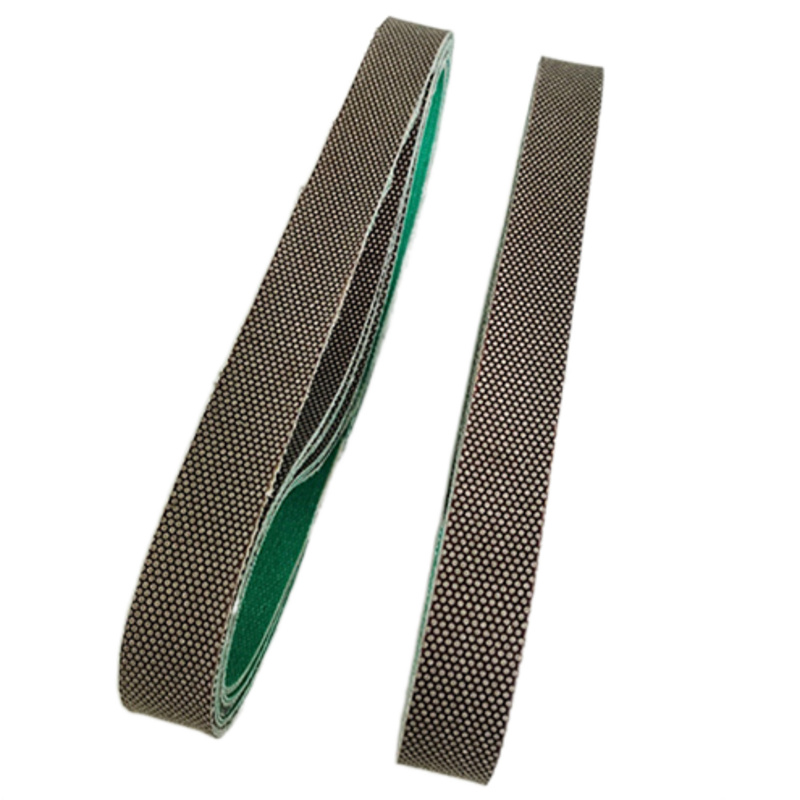
In the ever-evolving field of precision manufacturing, advancements in grinding wheel technology continue to play a critical role in improving machining accuracy and productivity. Recent developments in bond materials used in grinding wheels mark a significant breakthrough, enabling manufacturers to meet increasingly stringent demands from various industries. These innovations, combined with cutting-edge manufacturing techniques, have paved the way for producing superhard tools with enhanced performance and durability.
Grinding wheels are essential tools utilized in precision machining processes. Their core component—the bond material—serves as a matrix to hold abrasive grains together and significantly influences the wheel’s grinding efficiency, lifespan, and surface finish quality. Innovations in the bond composition and formulation have led to improved adhesion, heat resistance, and wear properties, ultimately advancing the capabilities of grinding wheels in complex applications.
One leading enterprise at the forefront of these advancements is TYRFING, a high-tech company specializing in the development and manufacturing of special diamond polishing and cutting tools empowered by intelligent manufacturing technology. TYRFING’s focus on innovation is evident through its strategic investment in high-precision testing equipment imported from Germany, which allows the company to optimize product quality and meet exacting customer specifications.
**Enhanced Bond Formulations Drive Performance**
Traditional grinding wheels typically utilize vitrified, resin, rubber, or metal bonds, each offering distinct characteristics tailored to different applications. However, these bonds may show limitations when dealing with superhard abrasive materials such as diamond or cubic boron nitride (CBN). Addressing these challenges, researchers and manufacturers have been experimenting with advanced bonding solutions that enhance the mechanical and thermal stability of grinding wheels.
By refining the chemical composition and bonding processes, the new generation of bond materials exhibit superior durability and resistance to heat generation during high-speed grinding. This translates to lower thermal damage on workpieces, reduced deformation, and improved surface integrity. As a result, industries requiring ultra-precise machining—such as aerospace, automotive, electronics, and tooling—benefit tremendously from enhanced grinding wheel performance.
**TYRFING’s Intelligent Manufacturing Approach**
TYRFING stands out by integrating intelligent manufacturing into the production of diamond, CBN, and other superhard tools. The company’s incorporation of German high-precision testing instruments ensures rigorous quality control during every phase of production. This level of scrutiny enables TYRFING to tailor the abrasive tools’ specifications—such as grit size, bond type, and shape—to the unique needs of its diverse clientele.
Furthermore, TYRFING continually innovates in developing custom bond materials that synergize with high-performance abrasives, resulting in grinding wheels that achieve exceptional balance between hardness, toughness, and wear resistance. This customization capacity is particularly important for sectors where precision machining directly affects product safety and functionality.
**Applications Benefit From Improved Grinding Tools**
The impact of these technological improvements is widespread. Manufacturers dealing with hard-to-machine materials—such as ceramics, hardened steels, and composite materials—experience enhanced throughput and surface quality by using grinding wheels with optimized bond materials. The reduction in wheel wear not only decreases operational costs but also minimizes machine downtime, fostering more efficient production cycles.
Moreover, in industries where surface finish and dimensional accuracy are critical, precision-engineered grinding wheels contribute to tighter tolerances and consistent product quality. For example, in the semiconductor and optics industries, smoother surfaces and minimal subsurface damage achieved through advanced grinding technology can significantly impact device performance.
**Future Outlook**
With continuous research and development, the evolution of bond materials for grinding wheels is poised to keep advancing. Material scientists and manufacturers are exploring novel bonding agents, including hybrid and nano-composite bonds, that promise further improvements in grinding efficiency and tool lifespan. Artificial intelligence and data-driven manufacturing processes, as practiced by innovative companies like TYRFING, will accelerate the optimization of tool properties and customization capabilities.
These trends underscore a broader industry shift towards smarter, more adaptive manufacturing tools that meet the demands of next-generation precision engineering. As grinding wheel technology progresses, end-users in high-value manufacturing sectors can expect to achieve higher quality, reduced production costs, and expanded possibilities for machining complex geometries.
**Conclusion**
The latest advancements in bond materials for grinding wheels mark a pivotal development in precision manufacturing. By enhancing bond composition and integrating intelligent manufacturing practices, companies such as TYRFING exemplify how technology can drive the creation of superior diamond, CBN, and other superhard abrasive tools tailored to stringent customer requirements. These enhanced grinding wheels deliver improved durability, heat resistance, and grinding performance, directly benefitting a wide array of industries facing challenging machining tasks.
As manufacturers continue to innovate and refine grinding wheel technology, the combination of high-tech equipment, custom engineering, and advanced bond formulations will remain essential to achieving unparalleled precision and efficiency in industrial production. This ongoing progress not only improves manufacturing outcomes but also helps industries push the boundaries of what is possible in material processing and tool development.