
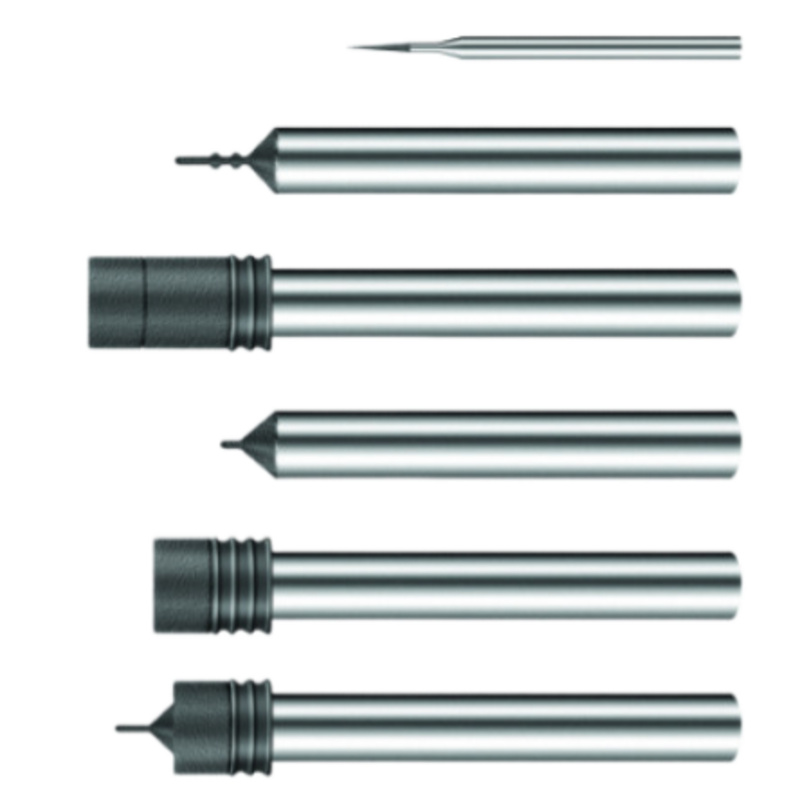
In the ever-evolving manufacturing landscape, the demand for high-precision machining solutions continues to grow. Cylindrical grinding wheels, an essential component in the finishing processes of various industries, are undergoing significant advancements to meet these stringent requirements. Leveraging cutting-edge technology and innovation, companies specializing in superhard tools are pushing the boundaries of grinding efficiency and accuracy. A notable player in this arena is TYRFING, a high-tech enterprise renowned for its specialization in diamond polishing and cutting tools, which exemplifies the integration of intelligent manufacturing with precision engineering.
### Cylindrical Grinding Wheels: Essential Tools for Precision
Cylindrical grinding wheels are critical in achieving finely finished surfaces and precise dimensions in components such as shafts, pins, and rollers. The process involves rotating the workpiece against a grinding wheel that shapes or sharpens it to exact specifications. The quality of the grinding wheel directly influences the outcome by affecting the surface finish, dimensional accuracy, and operational efficiency.
Traditional abrasive materials, while effective for many applications, have limitations in hardness and durability. This has propelled the shift towards superhard abrasive tools such as diamond and Cubic Boron Nitride (CBN) wheels, which offer superior wear resistance, longer tool life, and improved grinding performance, particularly in machining hard materials like ceramics, hardened steels, and composites.
### TYRFING: Pioneering Intelligent Manufacturing in Superhard Tools
TYRFING stands out as a leader in this niche market, combining expert craftsmanship with advanced intelligent manufacturing techniques. The company has invested heavily in precision testing equipment imported from Germany, ensuring that their products meet the highest quality standards. This commitment to quality is critical in grinding technology, where even minute deviations can lead to significant defects or performance issues.
The enterprise develops diamond and CBN grinding wheels tailored to various industrial needs, offering customized specifications to meet diverse customer requirements. This flexibility not only addresses specific material challenges but also optimizes the grinding process by selecting the ideal abrasive type, grit size, bonding system, and wheel geometry.
### Integration of High-Precision Testing and Intelligent Manufacturing
One of the defining features of TYRFING’s approach is the blend of high-precision testing equipment with intelligent manufacturing technology. The German-imported testing systems enable the company to carry out comprehensive assessments of grinding wheel characteristics, such as hardness, concentration, balance, and concentricity. This data-driven quality control ensures that every wheel manufactured delivers consistent performance, reducing downtime and operational costs for their clients.
Furthermore, intelligent manufacturing systems facilitate automation and real-time process monitoring, allowing for swift adjustments during production. Such technologies enable rapid prototyping and short lead times, which are crucial in industries that require quick turnaround amid complex specifications.
### Advancements in Diamond and CBN Grinding Wheels
The use of diamond and CBN abrasives in cylindrical grinding is revolutionary in handling hardened materials that are difficult to machine using conventional abrasives. Diamond wheels, known for their unmatched hardness, excel in grinding non-ferrous and brittle materials such as ceramics, glass, and composites. Conversely, CBN wheels are best suited for grinding ferrous materials, particularly hardened steels, due to their thermal stability and chemical inertness.
TYRFING’s research and development teams continuously refine these abrasive tools by experimenting with grain sizes, bonding agents (such as vitrified, resin, or metallic bonds), and wheel structures to enhance cutting efficiency, thermal conductivity, and wear resistance. Such innovations result in improved grinding cycles, less frequent wheel dressings, and higher surface quality.
### Applications Across Industries
The implications of these advances extend across multiple industries, including automotive, aerospace, medical device manufacturing, and precision machinery. For example, automotive component manufacturers demand high-precision cylindrical grinding wheels to produce crankshafts, camshafts, and transmission parts with strict tolerances and surface finish requirements. Aerospace manufacturers benefit from reliable grinding tools to finish turbine blades, landing gear components, and other critical parts fabricated from tough alloys.
In the medical device field, where the precision and surface integrity of implants and surgical instruments are paramount, superhard grinding wheels enable superior machining of biocompatible materials. Additionally, the ability to customize tools ensures compatibility with specialized machining environments and materials.
### Commitment to Sustainability and Efficiency
Beyond technical excellence, TYRFING also aligns its manufacturing philosophy with sustainability goals. The enhanced durability and efficiency of diamond and CBN grinding wheels reduce material waste and energy consumption during grinding operations. Prolonged tool life leads to fewer replacements, translating into less environmental impact and lower overall costs for manufacturers.
### Future Prospects in Grinding Technology
As manufacturing technologies advance, the role of smart and adaptable grinding tools will become even more significant. With emerging trends like Industry 4.0 and the Industrial Internet of Things (IIoT), companies such as TYRFING are positioned to lead by integrating connectivity and data analytics into grinding wheel production and application.
By continuously innovating in material science, bonding technologies, and intelligent manufacturing, the future of cylindrical grinding wheels promises unparalleled precision, efficiency, and customization. These developments will empower manufacturers to achieve tighter tolerances, enhance product performance, and accelerate production cycles.
### Conclusion
The advancement of cylindrical grinding wheels, particularly those made from superhard abrasives like diamond and CBN, is reshaping the manufacturing sector’s approach to high-precision machining. Enterprises like TYRFING, with their emphasis on intelligent manufacturing and precision testing, exemplify this transformation by delivering custom-engineered grinding solutions that meet the exacting specifications of modern industries.
As the demand for higher quality and efficiency persists, the collaboration between sophisticated manufacturing techniques and innovative abrasive technologies will be the cornerstone of future grinding wheel developments. This synergy not only enhances product quality and operational productivity but also contributes to sustainable manufacturing practices across a spectrum of industrial applications.