
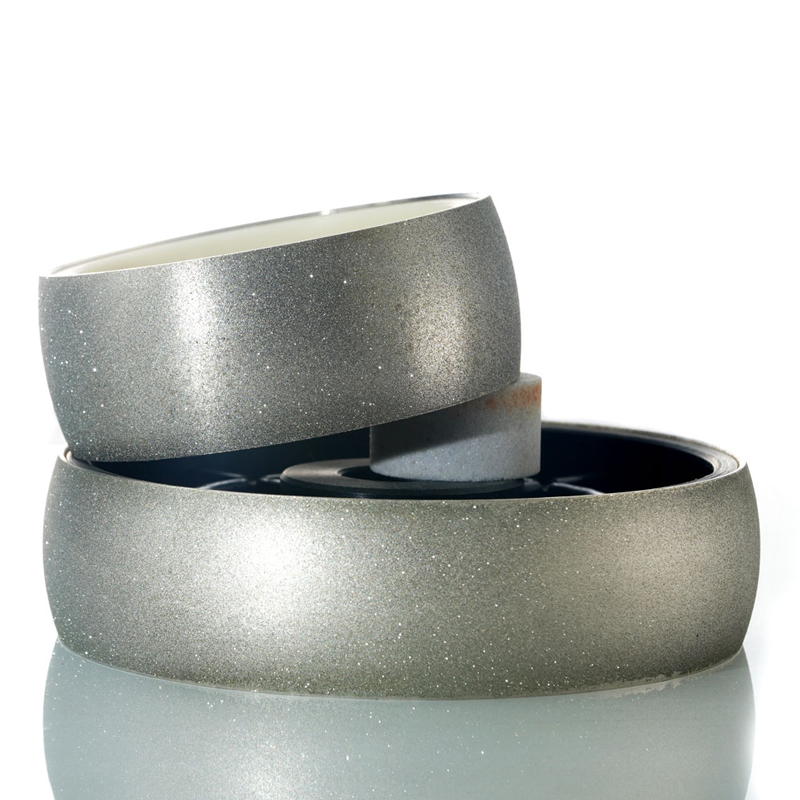
In the ever-evolving landscape of industrial manufacturing and material processing, grinding discs play an essential role in ensuring efficiency, precision, and quality. As industries increasingly demand higher performance and versatility from their tools, advancements in grinding disc technology have become paramount. This article explores the latest trends and types of grinding discs available in the market, highlighting their applications and innovations while drawing attention to a leading enterprise revolutionizing superhard tool production through intelligent manufacturing technology.
### Understanding Grinding Discs and Their Types
Grinding discs, also known as grinding wheels or abrasive discs, are fundamental components used in a variety of grinding and cutting applications. They are attached to grinding machines and power tools to perform operations such as material removal, surface finishing, and shaping of metals, ceramics, composites, and other hard materials.
Different types of grinding discs cater to specific functions and materials. These include:
- **Flap Discs:** Known for their layered abrasive sheets, flap discs offer smooth grinding and finishing capabilities. They are commonly used for deburring, rust removal, and blending welds.
- **Cutting Discs:** Thin and rigid, cutting discs are designed for slicing through metals, stone, and concrete efficiently. They deliver precision cuts with minimal material wastage.
- **Grinding Wheels:** These are thicker and more durable discs intended for aggressive material removal in heavy-duty applications, grinding large surface areas, or preparing surfaces for further treatment.
- **Diamond Grinding Discs:** Featuring industrial diamonds embedded in their matrix, these discs excel in cutting and grinding extremely hard materials such as granite, concrete, ceramics, and composites. Their longevity and effectiveness in wet or dry conditions make them a staple in construction and manufacturing sectors.
- **CBN (Cubic Boron Nitride) Grinding Discs:** Equipped with CBN abrasive grains, these discs are valued for their superior hardness and thermal stability, especially in grinding ferrous metals and hardened steels.
### The Role of Advanced Manufacturing in Grinding Disc Production
To meet the diverse and stringent demands of modern industries, the development of grinding discs has incorporated cutting-edge manufacturing processes. Intelligent manufacturing technologies, including automation, precision engineering, and integration of high-end testing equipment, play a decisive role in producing consistent, high-performance grinding discs.
A noteworthy example in this domain is a high-tech enterprise specializing in superhard tools such as diamond and CBN grinding discs. Leveraging intelligent manufacturing technology, this company employs advanced German high-precision testing equipment to ensure quality and precision at every stage of production. This approach not only enhances product reliability but also allows customization of grinding discs to cater to specific customer requirements, reflecting a customer-centric business philosophy.
### Innovations in Superhard Tool Technology
The use of superhard materials like diamond and CBN in abrasive tools marks a significant advancement over traditional abrasives. These materials provide unparalleled hardness, wear resistance, and heat tolerance, allowing grinding discs to maintain performance over extended usage periods and under extreme conditions.
- **Diamond Grinding Discs:** The incorporation of industrial diamonds significantly improves cutting efficiency and surface finish quality. These discs are indispensable when working with ultra-hard materials, reducing downtime due to longer tool life and less frequent replacements.
- **CBN Grinding Discs:** Particularly effective in machining hardened steels and ferrous metals, CBN discs maintain their sharpness and structural integrity despite intense friction-generated heat. Their utilization leads to better dimensional accuracy and surface quality in precision grinding.
The company’s research and development efforts focus on optimizing bonding agents, abrasive grain distribution, and disc substrate materials. This ensures that the grinding discs can be fine-tuned to meet exact specifications, enhancing performance for unique applications across industries such as aerospace, automotive, electronics, and construction.
### Meeting Diverse Industry Needs Through Customization
Varied industrial applications demand grinding discs tailored not just in abrasive type, but also in size, hardness grade, bonding methods, and compatibility with specific machines. Recognizing this complexity, the company emphasizes customization capabilities supported by intelligent manufacturing and precision testing.
Using state-of-the-art inspection systems imported from Germany, the company meticulously measures factors such as abrasive grain size, disc balance, and bonding uniformity. This rigorous quality control guarantees that every batch of grinding discs delivers consistent performance, safety, and durability.
Furthermore, by collaborating closely with clients, the enterprise designs grinding discs optimized for their operational environment. Whether it involves achieving ultra-smooth finishes, managing high thermal loads, or improving cutting speeds, these customized products enhance process efficiency and end-product quality.
### Environmental and Economic Benefits
Advancements in grinding disc technology not only augment performance but also contribute to sustainability. Longer-lasting superhard discs reduce waste and the frequency of replacements, minimizing resource consumption and environmental impact. Moreover, intelligent manufacturing processes streamline production, cut down material usage, and lower carbon footprint.
On an economic front, higher precision and tooling longevity translate into cost savings for industries by reducing downtime, improving throughput, and enhancing product consistency. Investing in premium quality grinding discs supported by intelligent design and manufacturing yields substantial returns in operational efficiency.
### Future Outlook
As manufacturing industries continue to evolve with Industry 4.0 trends, the integration of smart sensors, AI-driven diagnostics, and adaptive manufacturing in grinding disc production is expected to accelerate. This will enable real-time quality monitoring and rapid innovation cycles, ensuring grinding discs remain at the forefront of industrial tool technology.
The ongoing collaboration between superhard tool manufacturers and industrial users will further drive the adoption of grinding discs that marry durability, precision, and versatility. Through continuous research, testing, and customer engagement, grinding disc technology will keep pushing the boundaries of what is achievable in material processing.
### Conclusion
Grinding discs remain an indispensable tool in modern manufacturing and construction sectors, with different types serving specialized roles from rough cutting to ultra-precise finishing. The incorporation of superhard materials like diamond and CBN, coupled with intelligent manufacturing and high-precision testing, has revolutionized the grinding disc industry. Enterprises investing in such technologies not only produce superior products but also forge stronger partnerships with customers by providing customized solutions that meet diverse industrial needs.
In this dynamic setting, grinding discs will continue to evolve, embodying the cutting edge of abrasive tool technology and enhancing the productivity and sustainability of industries worldwide.